
الأورجانزا مقابل التفتا: مقارنة بين القماش - الدليل الشامل للساتان والأورجانزا والحرير
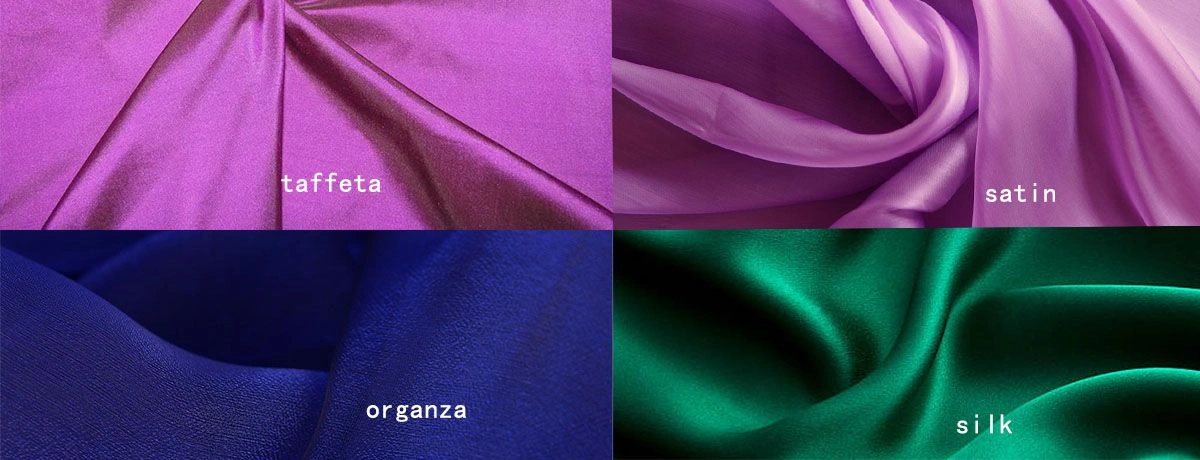
Organza and taffeta are both crisp plain-weave fabrics made from twisted filament yarns, but organza is sheer and very light (roughly 20-50 GSM) while taffeta is opaque and heavier (roughly 50-120 GSM). They share the same stiff hand and the same rustle, yet they serve different jobs: organza creates translucent layers and volume, while taffeta builds solid structure and coverage.
الوجبات السريعة الرئيسية
- Both are crisp, plain-weave filament fabrics; organza is sheer at ~20-50 GSM, taffeta is opaque at ~50-120 GSM.
- Organza gets its stiffness from high-twist fine yarns in an open sett; taffeta gets it from tightly packed yarns, graded in polyester by thread count (roughly 170T to 400T).
- Use organza for overlays, sleeves, veils, sheer curtains and gift bags; use taffeta for gown bodies, linings, petticoats and lined drapery. Many gowns use both.
- Satin and silk are not direct substitutes: satin is a weave with a glossy float face, silk is a fiber that can be woven into organza, taffeta or satin.
What's the Difference Between Organza and Taffeta?
The quickest test is to hold each one up to a window. Organza lets the light and the outline of your hand show through; taffeta doesn't. Both will stand away from a dress form and both rustle when moved, which is why buyers confuse them on a swatch card. The table below lines up the specs that actually separate them on an order.
| الممتلكات | الأورجانزا | التفتة نسيج حريري رقيق |
|---|---|---|
| نسج | Plain weave, open sett | Plain weave, dense sett |
| خيوط | Fine, high-twist filament | Smooth, tightly twisted filament |
| قاعدة من الألياف | الحرير والبوليستر والنايلون | حرير، بوليستر، نايلون، أسيتات |
| الوزن النموذجي | ~20-50 GSM | ~50-120 GSM |
| غموض | Sheer, see-through | غير شفاف |
| يد | Wiry, crisp, light | Crisp, papery, firmer |
| لمعان | Shimmering, often glossy or iridescent | Lustrous, often shot (two-tone) |
| ثنى | Holds volume, floats away from the body | Holds a sculpted, structured shape |
| المتانة | This delicate fabric snags and frays more easily than taffeta | More durable for a crisp fabric, resists tearing better than organza, but may show water spots and can crack along hard creases |
| الاستخدامات الرئيسية | Overlays, veils, sleeves, sheer curtains, gift bags | Gown bodies, linings, petticoats, lined drapery |
Weights are typical commercial ranges; yarn denier and thread density shift any individual fabric.
The useful reading for a buyer: in appearance, organza adds volume with an airy effect, and taffeta gives a solid, structured look. If a silhouette needs to look full but light, organza does it. If it needs to hide what's underneath, it's taffeta.
What Are Organza and Taffeta Made From?
Neither name fixes the fiber. Organza and taffeta are named for their construction, so the same label can arrive as silk, polyester, nylon or acetate, or as a fiber مزيج, and the fiber changes cost, care and lot consistency far more than the fabric name does; natural-fiber versions can also be more صيانة عالية than synthetics.
-
Silk organza and silk taffeta sit at the couture end: a refined hand, natural luster, higher price and dry-clean care. Many يمزج الحرير also appear in this category, and silk organza and silk taffeta are often dry-clean only. Silk taffeta is prized for shot, two-tone color in bridal and eveningwear.
-
Polyester organza and polyester taffeta carry most wholesale volume. They're colorfast, hold their crispness through washing, and repeat well from lot to lot. Polyester taffeta is the standard garment lining and the base for many coated outerwear fabrics.
-
نايلون versions are lighter and stronger for the weight, common in sheer nylon organza and in down-proof and outdoor taffetas.
-
أسيتات التفتا offers silk-like crispness and sheen at a mid price, with more careful pressing, though it can usually be ironed on low to medium heat.
Organza should be pressed on low heat with a pressing cloth, and it is best cleaned through dry cleaning only.
As a reference point from MH's own range, a 210T البوليستر التفتا woven from 63D yarns in warp and weft lands at about 60 GSM, light enough for linings and still fully opaque.
What Types of Organza and Taffeta Are There?
Both fabrics come in finish families that look very different on the bolt, and the finish name is often what designers actually specify.
Organza types
-
Crystal organza: high-gloss polyester organza with a glassy, transparent finish, the volume choice for decor and bridal overlays, with soft volume and layers that make it suitable for romantic styles and evening gowns.
-
Shot (two-tone) organza: warp and weft in different colors, so the fabric shifts shade with the light.
-
مرآة الأورجانزا: a liquid, metallic-looking sheen from a calendered or coated finish.
-
Embroidered, printed and flocked organza: patterned sheers for eveningwear, curtains and gift packaging.
For softer, flowing alternatives, قماش شيفون بالجملة and georgette are better suited to warmer seasons.
Taffeta types
-
Plain polyester taffeta (170T-420T): linings, bag interiors, umbrellas, and, when coated, rainwear and down-proof shells; its crisp texture is suited to structured designs and dramatic styles.
-
Shot (iridescent) taffeta: two-color weave for gowns and eveningwear.
-
Paper taffeta: very light and extra crisp for full skirts.
-
Moiré and embossed taffeta: watermark or pressed-pattern surfaces for gowns and decor.
-
Jacquard taffeta: a decorative woven option with pattern built into the fabric.
For a deeper breakdown of taffeta qualities, see types of taffeta fabric.
Which Is Better for Wedding Dresses and Eveningwear?
Neither is better on its own; they solve opposite parts of the same gown. Organza builds volume you can see through, with soft volume and layered effects in skirts, puffed sleeves, overskirts, veils, and illusion panels, but it is delicate, so when worn it should be handled gently. Taffeta builds the solid structure: fitted bodices, full ball gowns, petticoats and the lining that sits behind a sheer layer, making it especially suitable for dramatic silhouettes.
Season shifts the balance too: organza-heavy designs read lighter for spring and summer collections and are a natural fit for spring and summer weddings. By contrast, taffeta-led silhouettes are suitable for winter weddings, black-tie events, and galas, and the fabric holds sharp pleats and architectural shapes better than more flowing options. In short, organza is best for romantic, airy design elements, while taffeta is better for dramatic effects.
Which Works Better in Home Decor and Packaging?
Organza is the sheer specialist. In window treatments it filters daylight and gives daytime privacy while keeping a room bright, often as a sheer layer in front of a heavier lined curtain. An organza and tulle curtain fabric is typical of that use. Organza also dominates gift packaging: drawstring favor bags, ribbons and bows.
Taffeta works where body and color depth matter: lined drapery, cushion covers, table runners, lampshade covers and event chair sashes. For more hard-wearing home and workwear projects, blended options such as قماش قطني مائل TC 65/35 و T/C 80/20 twill for workwear offer a softer, more durable alternative to crisp sheers. Organza and taffeta sashes suit different looks depending on the wedding industry trend and the finish you want. Because it's opaque and holds a crisp fold, it gives decor pieces a tailored look that a sheer can't.
| الاستخدام النهائي | الأورجانزا | التفتة نسيج حريري رقيق |
|---|---|---|
| فساتين الزفاف والسهرة | Overlays, veils, sleeves, illusion panels | Bodices, ball-gown skirts, petticoats |
| بطانات | نادرا | Standard garment and bag lining |
| نافذة المعالجات | Sheer curtains, light-filtering panels | Lined drapery, valances |
| Events & table | Chair bows, table overlays | Table runners, chair sashes, backdrops |
| Packaging & trims | Favor bags, ribbons, bows | Bag linings, rosettes, trims |
| Outerwear (coated) | غير مستعمل | Rain jackets, down-proof shells |
Where Do Satin and Silk Fit In?
The original version of this guide compared four fabrics, and the confusion is understandable. But satin and silk sit on different axes from organza and taffeta, and fabric texture helps determine which styles each option suits.
-
ساتان is a weave, not a fiber. Its long floating yarns create a smooth, glossy face and a fluid drape, so satin hangs and pools where organza and taffeta stand away from the body. قماش ساتان بوليستر for womenswear is the volume version, also seen in trims such as الشريط الساتان البوليستر and in paradise satin for evening and wedding gowns. Rayon can also be woven into fabrics such as chiffon or taffeta; it is breathable but wrinkles easily.
-
حرير is a fiber, not a weave. It can be woven into silk organza, silk taffeta or silk satin, each priced well above its polyester counterpart and often feeling silky. Silk-touch synthetics such as نسيج حرير الحليب aim for the soft hand at a lower cost.
| قماش | What the name describes | اليد واللف | Typical role in a gown |
|---|---|---|---|
| الأورجانزا | Sheer crisp plain-weave material | Wiry, airy, holds volume | A versatile fabric for overlays, sleeves, veils |
| التفتة نسيج حريري رقيق | Opaque crisp plain weave | مقرمش، منظم | A versatile fabric for more structured dress styles |
| ساتان | Float weave with glossy face | Smooth, fluid, heavy drape | Bias gowns, sheath dresses |
| حرير | Fiber (any of the above) | Depends on weave | Premium versions of each |
For more on these two, see what is satin cloth ولنا silk materials guide.
Organza and Taffeta from MH, Supplier Overview
MH (Ningbo MH), founded in 1999, is a China-based fabric and garment-materials supplier that ships to more than 150 countries, and it carries polyester taffeta from 180T linings to 360T down-proof qualities next to sheers, satins and the trims that finish them.
That catalog runs to roughly 10,000 tailoring materials and fabrics, supported by 9 factories across about 350,000 m², a 3,000+ person workforce and 2,000+ partner manufacturers. For bridal houses, eveningwear makers, curtain producers and fabric wholesalers, it means a taffeta body, an organza overlay, lining, البوليستر الخياطة الموضوع, ribbon and lace from MH's wider garment accessories range can be matched and shipped on one order, with weight, thread count and shade held steady when a style comes back for reorder.
تصفح مجموعة أقمشة التافتا, or contact MH for a quote based on fiber, GSM or thread count, width and finish.
Request an organza & taffeta quote →


الأسئلة الشائعة
What is the main difference between organza and taffeta? Organza is a sheer, lightweight plain weave (about 20-50 GSM) made from fine high-twist filament yarns with open spacing, so light passes through. Taffeta is an opaque, heavier plain weave (about 50-120 GSM) traditionally made from tightly woven silk with tightly packed yarns. Both are crisp and rustle, but only organza is see-through.
Is organza stiffer than taffeta? They feel stiff in different ways. Organza is wiry and springy because of its high-twist yarns, so it holds volume while staying light and sheer. Taffeta is firmer and papery because of its dense weave, and it is known for its characteristic rustling sound, so it holds a sculpted, structured shape. For a stand-away overlay, choose organza; for a structured body, choose taffeta.
Can organza and taffeta be used together? Yes, and they often are. A common bridal and eveningwear construction uses a taffeta skirt or bodice for structure and opacity with one or more organza layers on top for airy volume and shimmer, as organza adds an airy texture while taffeta supplies opacity and support. Rayon embroidery thread for embellishment is frequently added on top to highlight seams and motifs. Taffeta also serves as the lining behind sheer organza panels in gowns and curtains.
How should you care for organza and taffeta? Handle both carefully. Organza can develop wrinkles and snag easily, while taffeta should be stored carefully because hard folds can leave creases. If needed, taffeta can be ironed on low to medium heat.
Is taffeta the same as satin? No. Taffeta is a crisp plain weave with a matte-to-lustrous surface and a structured hand, while satin is a float weave with a glossy face and a fluid, heavier drape. Both can be made from silk or polyester, but taffeta stands away from the body and satin hangs close to it. Stretch and performance fabrics such as polyester Dri-Fit material و polyester spandex 4-way stretch Maserati fabric sit in a different category again, built for activewear rather than sculpted formal silhouettes.
What does 190T or 210T mean for taffeta? The "T" number is the thread count, the total of warp and weft threads per square inch. Higher counts such as 300T or 360T are finer, smoother and denser than a 170T or 190T lining taffeta. A 210T polyester taffeta in 63D yarns weighs about 60 GSM, a common lining weight.
